

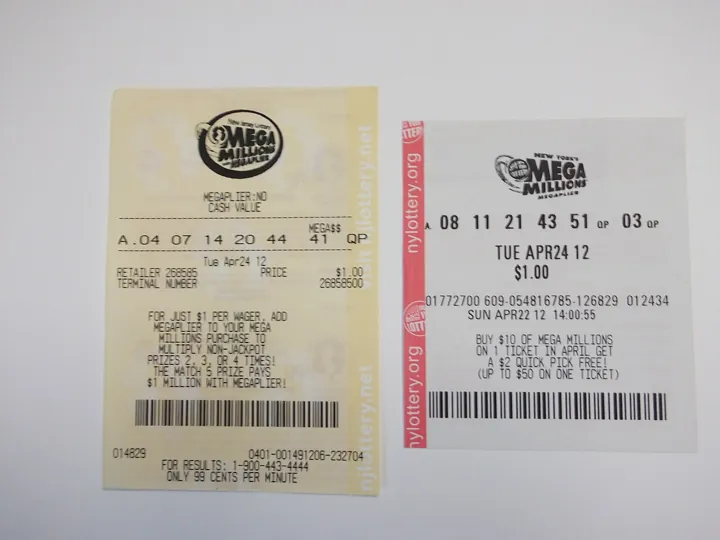
- Description
- Lottery tickets
- Source
- Lieutenant Ramathorn · original page
- Licence
- CC0 Public domain
 The illusion of control
The more involved we are, the more we think we master the outcome, even when the outcome does not depend on us.
In brief
- What: we overestimate the share of the outcome that we control, at the expense of chance and external factors.
- Why: choice, familiarity, involvement and habit give the feeling of control, even with no real effect.
- Spotting it: “it's under control”, no plan B, a procedure never tested.
- Avoiding it: separate what depends on us from what does not, automate and verify, test failure.
Definition#
 Fictitious illustration
The illusion of control is the tendency to overestimate one's ability to influence events, especially those whose outcome actually depends on chance or on other people. The American psychologist Ellen Langer demonstrated and named it in 1975.
It does not say that we have no control: real control exists, and it is valuable. It describes a gap between perceived control and real control. In projects, this feeling fuels plans with no margin, deployments with no rollback and risks that are “managed” on paper only.
The mechanism#
Langer showed that the illusion appears when a chance situation looks like a skill situation. Four ingredients contribute:
- Choice: choosing a ticket, an option, a tool gives the feeling of acting on the outcome.
- Familiarity and habit: the better known a task is, the more we think we can master it, including its uncertainties.
- Involvement: the efforts made, the competition, the time spent suggest that they weigh on the outcome.
- A lucky start: early successes suggest that we are in charge, and later deviations are attributed to external causes (see self-serving bias).
In an experiment by Langer (1975), office employees could buy a lottery ticket for 1 dollar. Some chose their own ticket from several, others were given one drawn for them. Just before the draw, they were offered the chance to sell their ticket back, at a price they set. Those who had chosen their ticket asked on average 8.67 dollars, those who had been given it about 1.96 dollars. The odds of winning were the same, but choosing had given the impression of influencing them. (Averages as reported by the study; check against the source.)
Resale price of a lottery ticket (Langer, 1975)
Loading the chart…
View the data
| Ticket given | Ticket chosen | |
|---|---|---|
| Ticket given | 1.96 | - |
| Ticket chosen | - | 8.67 |
In a related series of experiments (Langer and Roth, 1975), participants had to guess coin tosses whose successes were rigged by the experimenter: those who had early successes later rated their “skill” higher, although the outcome did not depend on them. Among professionals too, Fenton-O'Creevy and colleagues (2003) observed that traders at a London investment bank who judged themselves more in control achieved on average worse results and lower pay, according to their managers' assessments.
Where it shows up#
In project management#
- Migrations and cutovers: “we rehearsed, we've got it”: rehearsal reassures, but does not cover the surprises of cutover night; the rollback is not always tested.
- Steering by indicators: the green dashboard gives the feeling of holding everything together, while it only measures what is measured.
- Risk management: we treat as a “controlled risk” what depends on a vendor, a client or another team, on the strength of an action plan alone.
- External dependencies: a vendor, an API, a contractor are counted as if they obeyed the project schedule.
- Manual deployments: the team “knows” what it is doing and does not automate; the habitual gesture replaces control.
In management#
- Attribution of results: a good quarter is attributed to one's decisions, a bad one to economic conditions.
- Micromanagement: the manager believes that their presence in every decision guarantees quality, while it creates a bottleneck and discourages initiative.
- Reorganizations and transformations: we plan as if the reaction of teams and clients could be entirely directed.
- Hiring: the certainty of “getting a good feel” for a candidate in an interview exceeds its real predictive value.
Multiplying checks and refreshes gives the feeling of controlling a process whose sources remain outside your control. Verify what is really under your responsibility (source contracts, volumes, delivery times) before reassuring anyone.
Famous cases#
Langer's lottery ticket 1975#
Bias at play: illusion of control (effect of choice on a random outcome).
What happened. Ellen Langer had lottery tickets sold in offices. The tickets were cards illustrated with football players; each participant drew a card at random or chose their own. Before the draw, the researcher offered to buy the card back and let the employee set the price. Those who had chosen gave prices more than four times higher, even though their card had exactly the same probability of winning.
What this illustrates
A simple choice with no effect is enough to create a feeling of mastery. In a project, “steering” gestures with no real effect on the outcome (follow-up meetings, indicators, multiple sign-offs) can feed the same impression: the act of steering is not proof that you are steering. Always ask what the causal link is between the action and the targeted outcome.
Knight Capital: 45 minutes and 460 million dollars August 1, 2012#
Bias at play: assumed control of a manual deployment with no safeguards (illustration; the illusion of control is not the only cause).
What happened. In late July 2012, the brokerage firm Knight Capital deployed new code in its order router in order to take part in the New York Stock Exchange's new liquidity program. The deployment was incorrect: one of the eight servers did not receive the new code, and an old function, left in the router for years, was reactivated. On August 1, 2012, right at the open, the router sent more than four million orders to the market to fill only 212 client orders. In 45 minutes, the firm traded more than 397 million shares, built up very large unwanted positions and lost more than 460 million dollars. The SEC investigation concluded that the firm lacked sufficient safeguards to limit the risks of its market access, and had no deployment review procedure. Knight was subsequently absorbed by a competitor, Getco.
What this illustrates
The deployment was a known and rehearsed operation, believed to be mastered because it was familiar. Nothing in the investigation establishes that any individual “believed” they were in control: it is the structure that presupposed control (a manual gesture, with no independent verification, with no emergency switch). For your migrations and cutovers: do not trust the feeling of mastery, provide for independent verification, a tested rollback and a way to stop quickly.
Warning signs#
- “It's under control.” “We've got this.” “We've done it a hundred times.”
- No plan B, or a plan B that has never been executed; the rollback is not tested.
- All the risks are labeled “controlled”, including those that depend on third parties.
- The procedure relies on one person or on a manual routine gesture, with no independent verification.
- Good results are explained by the decisions taken, bad ones by external events.
- An indicator is carefully tracked while nobody knows whether it has any effect on the outcome.
Avoidance reflexes#
- Separate what depends on us from what does not. Draw two columns: the factors we can influence, those we can only endure. The risks in the second column call for margins and plan Bs, not “monitoring” actions.
- Test the rollback. A plan B never executed is a hypothesis. Rehearse the cutover and the rollback.
- Automate and verify independently. Replace routine gestures with scripts and checks; a sensitive operation must be validated by someone other than its author.
- Provide a kill switch. Stop threshold, automatic alert, feature flag: the means of stopping quickly is part of the plan.
- Run a pre-mortem. “The cutover failed: why?” The exercise reveals the dependencies we believed we had under control.
- Distinguish luck from skill in retrospect. Ask: “If we did the same thing again, would we get the same result?” A success that rests only on luck will not repeat itself.
- Measure what matters, not what reassures. For each indicator tracked, write down which decision it can change.
With AI: detect, remedy, mitigate#
AI can explore failure scenarios and review a procedure looking for its points of failure. But it does not measure real control: it only knows what it is told, and can even amplify the illusion by drafting polished plans that give the impression of mastery. It does not replace testing in real conditions.
Detect#
- Spot, in a cutover plan or a risk register, the risks declared “controlled” that actually depend on a third party.
- Identify the single points of failure of a procedure (a person, a manual gesture, a server).
- Compare the results attributed to decisions with those attributed to circumstances in a review.
Fix#
- Generate failure scenarios and the corresponding controls for a sensitive operation.
- Turn a manual procedure into a verifiable checklist, or into a script to review.
- Propose a rollback plan and the criteria for deciding to trigger it.
Mitigate#
- Ask for an independent review of the plan before the operation, without giving it your conclusion.
- Have it restate the split between what we control and what we endure.
- Run a retrospective that separates the part of luck from the part of decision.
Prompts to build into your practice#
1. What is beyond our control. To be used on a cutover, migration or go-live plan.
Here is the plan of the operation: [description, steps, owners, dependencies].
1. Separate what depends entirely on the team from what depends on a third party, an external system or chance.
2. For each element in the second category, propose a margin, a plan B and an early warning signal.
3. List the single points of failure (a person, a manual gesture, a component with no redundancy).
4. Say which steps, according to the text, have never been rehearsed, including the rollback.
Do not claim the plan is solid: look for where control is assumed rather than demonstrated.
2. Luck or skill?. After a success or a failure, in a retrospective.
Here is the course of a project or an operation and its outcome: [factual account].
In this account, separate what comes from the team's decisions and what comes from circumstances we did not control.
For each decision cited, ask: “If circumstances had been slightly different, would the outcome have changed?”
Finish with three lessons that hold even if luck had turned out otherwise.
How to build them in#
- Before a cutover: prompt 1 produces the list of doubts to resolve in the dress rehearsal.
- After an incident or a success: prompt 2 feeds a retrospective that does not merely congratulate or blame.
- In risk reviews: ask the AI to reread the register and challenge the “controlled” risks.
Precautions#
- A clear, well-written plan from AI is not a tested plan; do not confuse the quality of the form with mastery of the substance.
- AI does not know the real state of your systems: it can only flag what the text lets it see.
- Avoid blindly automating with generated code you have not reviewed: it is another form of the feeling of control.
- Do not share sensitive data (architecture, access) with an unauthorized tool.
Limits#
- Perceived control is not always illusory: a certain feeling of mastery is useful for motivation, health and perseverance. Part of the literature (Taylor and Brown, 1988) even sees it as a “positive” illusion.
- The size of the effect depends on the context: recent replications (Klusowski, Small and Simmons, 2021) do not clearly find the choice effect reported in 1975. It should be interpreted with caution.
- The Knight Capital case is an illustration: the investigations describe process failures, not states of mind.
- The distinction between real and perceived control requires data: an indicator or an experiment, not just a judgment.
Sources and verification#
- Langer (1975), “The illusion of control”, Journal of Personality and Social Psychology — the lottery ticket.
- Langer & Roth (1975), “Heads I win, tails it's chance: The illusion of control as a function of the sequence of outcomes in a purely chance task”, Journal of Personality and Social Psychology
- Fenton-O'Creevy, Nicholson, Soane & Willman (2003), “Trading on illusions: Unrealistic perceptions of control and trading performance”, Journal of Occupational and Organizational Psychology
- Taylor & Brown (1988), “Illusion and well-being: A social psychological perspective on mental health”, Psychological Bulletin
- Klusowski, Small & Simmons (2021), “Does choice cause an illusion of control?”, Psychological Science — reexamination of the choice effect.
- U.S. Securities and Exchange Commission (2013), press release No. 2013-222 on Knight Capital — figures of the August 1, 2012 incident.
See also#
Related biases#
Variants or cousins: not to be confused.
Counterweights and related reflexes#
What neutralises it.
- The pre-mortem
- Les listes de contrôle et le déploiement automatisé (concept or method, no page)
